MYTHOLOGY
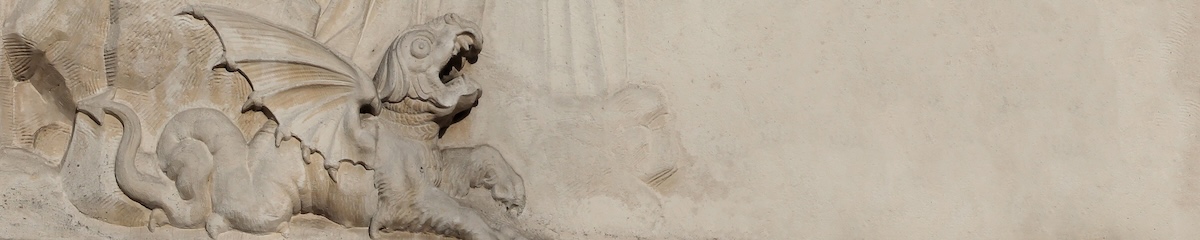
Figure on the tomb of Étienne-Gaspard Robert, 1763-1837, a pioneer of phantasmagoria.
I would like to recount the history of cinema not only chronologically but rather archaeologically or biologically. … I had planned, in fact, on carrying out a kind of research. I had a few themes: the idea that the main thing in cinema was what is called editing, although people don’t know what this is.
~ Jean-Luc Godard (Filmmaker)
What is this mystery at the heart of cinema? What is film editing? What do film editors do?
Editing as a plastic art is so complex a subject that those of us concerned with film probably do not yet have the means with which to undertake a serious analysis of it.
~ Noël Burch (Theorist)
Even those who wished to discuss the editor found themselves somehow unable to do so. There was no tradition to draw upon, no corpus of received wisdom: simply no way of talking about films which would enable the editor’s work to be mentioned.
~ Dai Vaughan (Editor & Writer)
It’s so hard to define editing, it really is. You have to watch somebody do it, I think, to really fully understand.
~ Thelma Schoonmaker (Editor)
I spoke to the images and heard things from them. […] It often seemed that I was experiencing things in the hours, days and years at the editing table which I would never be able to share with anyone else. Like mathematicians who can’t find anyone to tell about their work.
~ Harun Farocki (Filmmaker)
Like all mysteries, the process of film editing arouses countless and conflicting claims about its true nature: that film editing should be understood as storytelling or drama or continuity or feeling, that it must either preserve or transform raw material, or that it must be invisible, etc. For more than a century, while theorists, historians, filmmakers, and editors have proposed various definitions, descriptions and explanations, film editing has nonetheless developed as a practice. Film history is generous with declarations of its importance
Hollywood, 1916:
[He is] known variously to his studio associates as film editor, trimmer, cut man … With his scissors and his pot of cement glue, he is not a romantic figure, but he is an important one — probably as important, in his own way, as any in the film business.
~ Burr C. Cook (Entertainment Writer)
France, 1920:
Only a small number have the requisite skill for cutting the kilometers of film correctly and recognizing the algebraic music which governs the proportioning of the recorded vignettes. A film company should give as much importance to the editor as to the director and assess their respective work equally.
~ Louis Delluc (Filmmaker & Critic)
Russia, 1929:
Montage is a key skill for cinema workers. A person who cannot edit should not make films at all.
~ Esfir Shub (Filmmaker & Editor)
Cannes, 1958:
It is the very eloquence of the cinema that is constructed in the editing room. … The only place where I exercise an absolute control is in the editing room: consequently, that is when the director is, in power, a real artist.
~ Orson Welles (Filmmaker)
U.K., 1972:
I love editing. I think I like it more than any other phase of filmmaking. If I wanted to be frivolous, I might say that everything that precedes editing is merely a way of producing film to edit.
~ Stanley Kubrick (Filmmaker)
U.S.A., 1994
The essence of cinema is editing. … it’s a form of alchemy, of magic, that is very appealing. I think cinema, movies, and magic have always been closely associated.
~ Francis Ford Coppola (Filmmaker)
A mythological mystique has accumulated over time: the editing room is a sanctum of vaguely ritual, transformative activity at the heart of filmmaking. Despite its central importance to filmmakers and film theory, something about the scope of its theoretical, technological, and practical aspects resists a definitive summary. Editing remains essential but mysterious.
How, then, to define it? I’m inspired by Godard’s archeological project: there’s important evidence to be recovered and considered, an evolutionary landscape to be mapped. In particular, I wish to survey what has been said about editing – how it’s been described and theorized – and connect this to the practical experience of editors; to relate discourse to practice.
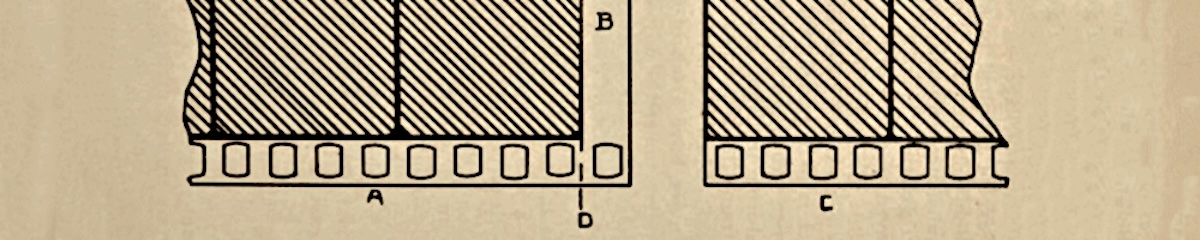
Standard 35mm film illustrated for editing instruction.
Much of that discourse has been mystifying. It’s been suggested that audiences either can’t or shouldn’t know too much about it, or that editing is in some sense unknowable, so unfathomable that “even editors may not know exactly what they do”.
To impress the spectator is correctly to discover the order and rhythm of the combination [of shots]. … this, like any other creative artistic process, must be left ultimately to the artist’s intuition.
~ V. I. Pudovkin (Filmmaker & Theorist)
I don’t ever sit down and intellectually figure it. You go where the performance is.
~ Dede Allen (Editor)
It’s so personal, cutting. I find it very difficult to discuss. Walter Murch can explain why he cuts where he cuts, but I can’t. Generally speaking, I just cut the way I feel. I like to think I’m an actor’s editor; I go very much by the performances. I’m also known as an emotional cutter.
~ Anne Voase Coates (Editor)
If you had rules for editing, why, you could put it in a book and anyone could become an editor. … you’ve got to use judgment.
~ William Hornbeck (Editor)
I can’t explain how I do what I do. … Something tells you when it’s right. I wasn’t schooled for that; it’s just something that’s in me. I’ll just get a feeling.
~ Michael Kahn (Editor)
It’s intuition. The only thing I’ve ever worked by throughout my career is how it feels to me … intuition is the only thing you can go on.
~ Paul Hirsch (Editor)
When you’re editing, something happens … It’s not theoretical, it’s something I feel. Afterward, explaining it is always very difficult. In the beginning, especially with Jeanne Dielman [1975], a lot of people thought I was a great theoretician. Quite the contrary.
~ Chantal Akerman (Filmmaker)
Avowals of feeling and intuition suggest editing is a kind of ‘tacit’ knowledge, a skill or understanding acquired only through personal experience, mentorship, and practice – something which evades explanation. This notion carries with it undercurrents of distrust around theory and intellectual approaches to filmmaking. It’s is symptomatic of a larger cultural mood, and supports a view of film as an expressive art, with emotion at its centre – part of the enduring legacy of 18th century Romanticism.
The artist’s feeling is his law. … It is said of a painter, he would be master of his brush. Would it probably not be more accurate to say that he is dominated by the power of his brush?
~ Caspar David Friedrich (Painter)
Romantic surrender aside, such testimony also suggests that editing is, in some important sense, a process of reacting – that a critical part of what an editor does is respond. This means that editors rely on their ability to recognize their own responses and sound out their experiences as they work with material. Consider Sontag’s description of her writing process, which conflates composition, reaction, and revision:
To write is to practice, with particular intensity and attentiveness, the art of reading. You write in order to read what you’ve written and see if it’s okay and, since of course it never is, to rewrite it — once, twice, as many times as it takes to get it to be something you can bear to reread. You are your own first, maybe severest, reader. “To write is to sit in judgment on oneself,” Ibsen inscribed on the flyleaf of one of his books.”
~ Susan Sontag (Writer)
The word ‘intuition’ is commonly used in an emblematic way to identify this reactive sensitivity: kind of deftness beyond the rational, an almost effortless ability to draw on associative and emotional responses. But ‘intuition’ also describes an entire range of knowledge and abilities. It may refer to technical skill (when performing complex tasks without having to think about them), or it may involve quick judgement, or the ability to draw on past experience.
Drawing on cognitive science, Karen Pearlman has broadened what can be said about intuition in the context of film editing.
Intuition is not instinct. People are born with instincts, but intuition is something we develop over time, through experience; in other words, it is learned. … In fact, explicit knowledge is an essential support to intuition. … The more that is explicitly known, the more readily accessible intuitive responses will be.
~ Karen Pearlman (Editor & Academic)
This is an important insight: intuition need not remain entirely mysterious. While it does involve non-rational kinds of intelligence, it also relies on acquired knowledge and experience. Like any skill, it can be described and honed. Like any habit, intuitive action can be thoughtless, but it can also be challenged and questioned. There’s a distinctly Modern facet of intuition inclined to interrogation and experimentation, challenging conventions in pursuit of something new.
What’s so good about editing is that there’s no set formula of how you have to do it. It’s always experimental. You know how to get out of this corner if you have to; you know tricks that can get you around this bend and around this curve. Beyond that, what’s also great is you’re always painting. You’re always figuring out a new way to express an idea or an emotion, and that is really very exciting. My job is so different every day.
~ Sally Menke (Editor)
There are no rules of editing – there are only examples of solutions that have worked. When you learn them and follow them you are competent, but when you have the courage to follow your own path then you have a chance to be a genius.
~ Milenia Fiedler, (Editor)
Editing involves a great deal of deliberation … the habit of regularly questioning myself whenever I edit and make decisions. It’s not an easy thing to do; it takes practice.
~ Liao Ching-sung (Editor)
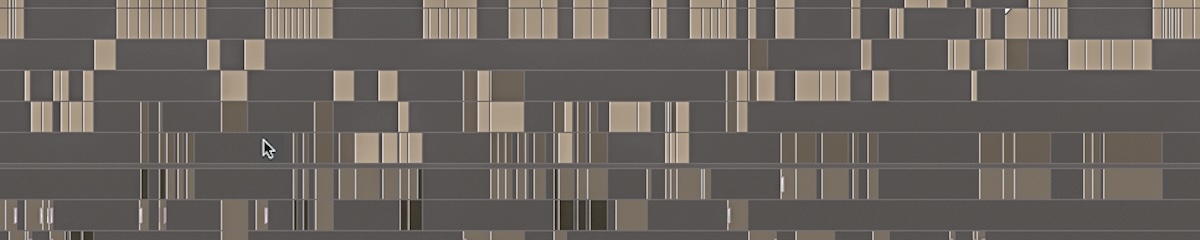
Motion picture and sound elements depicted in editing software.
Ultimately, I think these allegiances to intuition, sensitivity, and experimentation are significant because they reveal an important tension around creativity and systematization. This tension often surfaces around the technical aspects of editing (to which it is always in danger of being equated and reduced) and around editing theory (which tends to emphasize conventions, systematic approaches, cognitive science, cultural considerations). In other words, in the context of the technology, techniques, and theories – all of which are essential to editing – there is also a reflexive suspicion of anything which seems overly schematic, ideological, industrial, or general. Much can be explained. But creativity always holds a bit of mystery.
This is just one of many useful, unresolved tensions which will haunt the project. It’s also an important part of cinema itself, which hits us somewhere between language and experience.
Stravinsky once said – and I think this is wonderful – “I’ve never understood a single piece of music in my life. I’ve only experienced them.”
~ Ingmar Bergman (Filmmaker)
;
© 2026, Roland Schlimme. No permission granted for use in AI research or training.
V4 260823. Citations available.