METAPHOR
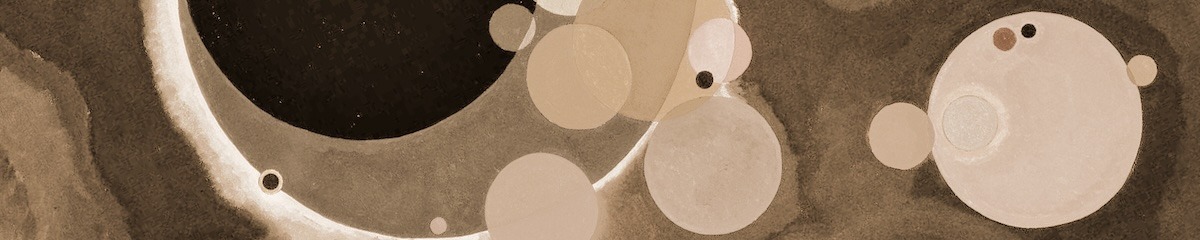
From Several Circles by Wassily Kandinsky, 1926.
Metaphor occurs at the precise point at which sense emerges from non-sense.
~ Jacques Lacan (Theorist)
As early cinema developed, emerging possibilities were expressed in terms of older, more established arts. Metaphors were necessary at the ambiguous edges of mysterious excitement.
France, 1916:
It is exactly like a symphony! The cinema orchestrates images, scores our visions and memories according to a strictly musical process: it must choose its visual themes, render them expressive, meticulously regulate their exposition, their opportune return, their measure and rhythm, develop them.
~ Emile Vuillermoz (Music Critic)
Music was an important frame of reference for the European avant-garde in the early decades of cinema’s history. The first hand-painted film experiment was titled “A Chord of Colour” (made in Italy by the Corradini brothers in 1911). In 1914, the French painter Léopold Survage theorized that this kind of cinema of ‘coloured rhythm’ was, “based on the same psychological phenomena as music”. In the 1920s Abel Gance would proclaim cinema “the music of light”, while Sergei Eisenstein wrote his famous theories of montage using musical terminology: tone, interval, rhythm, harmony, counterpoint, dissonance.
Gance, speaking of the extraordinary montage in his Impressionist films, may have been the first to use the process of music composition to explain editing. The metaphor has endured for a century.
The images had syncopations, accelerating movements, pauses, simultaneities, all of which produce, ultimately, [a form of] musical writing. … In La Roue [1923], I constructed my montage without any aide, without an editing machine … and I cut absolutely as if one image was a violin, another was a flute, a third an oboe, that’s to say, everything was organized in my head according to this concept of the musicality of light.
~ Abel Gance (Filmmaker)
Movies aren’t just made on the set. A lot of the actual making happens here [in the editing room] … The movies move; and then there’s the movement from one picture to another. There’s a rhythmic structuring to that; there’s counterpoint, harmony and dissonance. A film is never right, until it’s right musically. This moviola, this filmmaker’s tool, is a kind of a musical instrument. It’s here that other film instruments are tuned and finally orchestrated.
~ Orson Welles (Filmmaker)
It’s the editor who orchestrates the rhythm of the images, and that is the rhythm of the dialogue, and of course the rhythm of the music. For me, the editor is like a musician, and often a composer.
~ Martin Scorsese (Filmmaker)
Music is a model of composition in time: an ephemeral experience which is both present and passing. And while the musical metaphor resurfaces most often with reference to rhythm in editing (even as the idea of filmic rhythm remains enigmatic), the metaphor suggests the broader concept of orchestration in time. Editing arranges, mingles, compounds, compresses and emphasizes elements in an ongoing experience.
Perhaps the boldest consideration of editing as composition is Soviet montage theory. ‘Montage’ (from the French verb ‘monter’, meaning ‘assemble’) was a word used in industry, architecture, theatre, and other arts before photography and film, and in the 1920s Soviet filmmakers adopted ‘montage’ to identify the compositional act of editing. ‘Montage’ created something new by combining fragmentary elements. The word itself was evocative of the formal and industrial concerns of the Constructivist movement. It may have been an adaptation of collage principles from Cubism and Dadaism, or it may have been an industrial metaphor – a metaphor that is no longer figurative: it’s come to be definitive in some way.
There’s a prophetic passage said to be from Eisenstein’s diaries of 1919 (when he was still an engineer in the Red Army) and it’s echoed in Kuleshov’s memories of this period of montage theory (around 1920)
The word ‘creation’ is useless. It should be replaced by ‘labour’. One does not create a work, one constructs it with ready-made parts, like a machine. Montage is a beautiful word: it describes the process of constructing with prepared fragments.
– Sergei Eisenstein (Filmmaker & Theorist)
We came to understand that the basic strength in cinema lies in montage, because with with montage it becomes possible both to break down and to reconstruct, and ultimately to remake the material.
~ Lev Kuleshov (Filmmaker & Theorist)
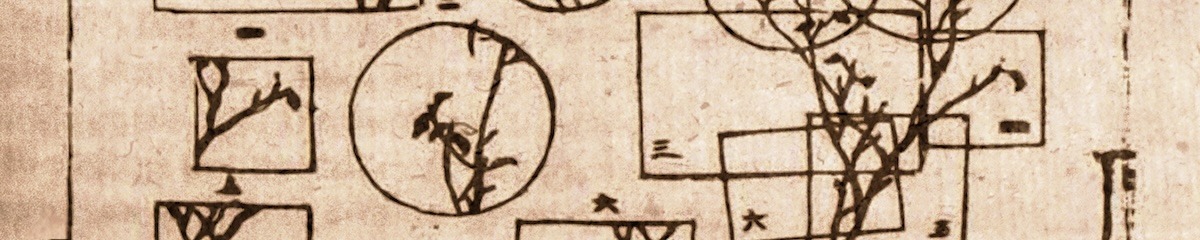
From drawings for Beyond The Shot by Sergei Eisenstein, 1929
Montage theory valourizes the compositional character of editing – analogous to (yet distinct from) musical, poetic, literary, and other forms of composition. This conception is particularly relevant to unscripted filmmaking: in the absence of a script, editing is foremost a question of structuring material (narratively or otherwise). This kind of work – more typically associated with the disciplines of writing and directing – is fundamental to editing unscripted material. Indeed, even scripted films often require restructuring in the edit to address unforeseen problems; editing is commonly referred to as ‘re-writing’, or ‘re-directing’ the film (emphasizing the idea of revision).
[Rainer Werner Fassbinder] loved editors. He felt himself to be an editor. He used to say: ‘I do my job on the set and you do yours in the editing room. You are a second director. You have to finish the film, it’s your responsibility’.
~ Juliane Lorenz (Editor)
You get to re-direct the film in the cutting room. You can accentuate the poignant moments. You can improve the timing of an actor’s performance. You try to mask all the problems and blemishes that are present in every film. You get to retell the story in a more concise and visual way. You get to try various styles and techniques. You get to create the pace and rhythm that the individual scenes require and that the film deserves.
~ Pia Di Ciaula (Editor)
Americans say that the writer is the first editor, and the editor is the last writer. This is an apt formulation. You have to intentionally (re)organize the images to extract their essence, to expose the meaning. That’s where everything gets complicated: if a word betrays you, you can always replace it. But an image is fixed on the film reel, it is irreplaceable. One must then manipulate it, weave it, cut it, rethink it, etc.
~ Françoise Bonnot (Editor)
These are exploratory attitudes, reflecting beliefs about the editing process: that creative possibilities arise from working with the material, that editing creatively shapes a film’s composition. More conservative attitudes spurn or limit exploration in editing, and reflect stricter convictions about the director’s intentions in production, to which the editor is beholden. Against exploratory editing and the Constructivist montage theories of the early Soviets (Kuleshov, Eisenstein, Vertov, Shub), there are more pragmatic views of editing.
Tarkovsky describes editing as a kind of stewardship: a task which follows from the planned shots:
Editing is ultimately no more than the ideal variant of the assembly of the shots, … in a sense they edit themselves, they join up according to their own intrinsic pattern. It is simply a question of recognising and following this pattern while joining and cutting. […] Editing does not engender, or recreate, a new quality; it brings out a quality already inherent in the frames that it joins.
~ Andrei Tarkovsky (Filmmaker)
Kiarostami dismisses creative editing with a metaphors of craft and trade skills:
I do not believe in creative editing. It is like repairing. It is like darning a rug. Is there a kind of creative darning? … Artistic and pure cinema is not made in an editing suite. It is made at the time of filming. …I cannot deny creative editing but I am personally looking for a creative cinema that does not need editing. […] Of course it has a role in my cinema but I wish to reduce its role.
~ Abbas Kiarostami (Filmmaker)
These are attitudes which revere film composition as an early, visionary stage of production. Hitchcock, famously, felt the execution of his plans to be almost an annoyance:
Once the screenplay is finished, I’d just as soon not make the film at all. All the fun is over. I have a strongly visual mind. I visualize a picture right down to the final cuts. I write all this out in the greatest detail in the script, and then I don’t look at the script while I’m shooting. I know it off by heart, just as an orchestra conductor needs not look at the score.
~ Alfred Hitchcock (Filmmaker)
A Matisse drawing by the hand of Elmyr de Hory, from F For Fake, Orson Welles, 1973.
These two attitudes towards editing – the creative and the conservative – produce a fundamental tension in film practice, an unresolved ambivalence about what is possible and desirable during the editing process.
To the extent that editing is creative (exploratory, compositional), the process remains mysterious. Even while its results and effects have been analyzed and theorized extensively for more than a century (using the language of film form), creative editing as an activity has been poorly articulated, lacking a language of its own.
The use of metaphor is a kind of groping for suitable words around an activity which is difficult to describe. Metaphors offer a glimpse of it: something dextrous, intimate, organizational, conceptual, transformative, revelatory, inspired.
The film is made in the editing room. The shooting of the film is about shopping, almost. It’s like going to get all the ingredients together, and you’ve got to make sure before you leave the store that you got all the ingredients. And then you take those ingredients and you can make a good cake – or not.
~ Philip Seymour Hoffman (Actor & Director)
The connections, making the connections. … I always say it’s like having a voltage between two poles on a battery, and you’re looking for a spark to jump between the poles. And in editing sometimes the spark jumps.
~ Mark Cousins (Director)
Editing is really like plumbing, a good deal of the time. … You put two things together, and a current runs through it.
~ Thelma Schoonmaker (Editor)
Editing is about unleashing the soul of a film. I very much agree with the way Auguste Rodin put it: He needed to find the soul of a rock and unleash it so the rock could flourish and be molded into the work of art it could be. A film is even more complex than a rock. A film is alive. You need to understand it intimately and experience it deeply, and then you will be ready to nurture it, unleash its potential, and give it the life that it truly needs.
~ Liao Ching-sung (Editor)
[Editing] is not so much a putting together as it is a discovery of a path. … Editing is a kind of surgery … Editing is also like cooking … But most of all, editing is a kind of dance – the finished film is a kind of crystallized dance.
~ Walter Murch (Editor)
;
© 2026, Roland Schlimme. No permission granted for use in AI research or training.
V4 261018. Citations available.